
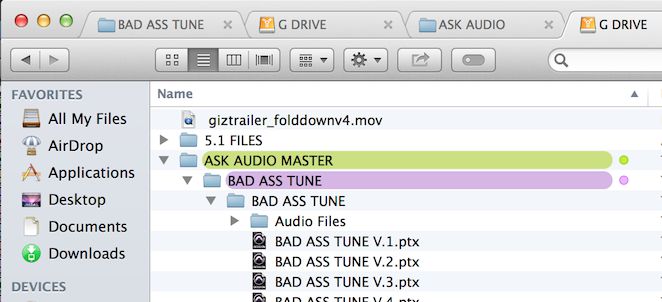
The Mac is an obvious candidate if you're looking for a computer to make music with. The choice can be overwhelming, though, with devices ranging from a few hundred pounds or dollars to thousands. Mac OS always takes the prize in the usability department and for music producers, this enhances production and keeps work across multiple apps smooth and seamless. On Mac OS, the file system is more logical, clear and simpler to use.
It was February 1981. Nearly half of the Apple II engineering team at Apple Computer had been fired the previous day, and now the company's CEO, Steve Jobs, was peering over the wall of programmer Andy Hertzfeld's cubicle.
Hertzfeld was typing code for Apple II's operating system when Jobs rounded the corner, yanked the computer's power cord out of the socket and carted the machine -- with Hertzfeld in tow -- from the corporate campus to a small office overlooking a Texaco station in Cupertino, Calif.
Advertisement
Advertisement
Mac Is Better For Music Player
Hertzfeld wasn't fired; he was promoted.
He would spend his days authoring code for Apple's new Macintosh project [source: Hertzfeld]. The team had only a few months to create a new operating system that would be faster and more efficient -- and become the predecessor of today's iMacs.
The abrupt reassignment and truncated schedule were a workplace phenomenon Apple employees knew as a 'reality distortion field.' This Star Trek term was used to describe Jobs' ability to convince nearly anyone to do nearly anything -- and deliver it according to an unrealistic timetable [source: Hertzfeld].
Regardless of whether Jobs really could bend the time-space continuum, his drive and personality helped Apple Computers change the way people use technology. It was one of the first companies to transform the computer from an imperceptible mass of vacuum tubes stationed primarily at universities and government offices to a manageable-sized machine for ordinary people.
Today, Apple is as relevant as ever, thanks to new releases of Apple operating systems, software and hardware, and related products like the iPod, iPhone and iPad.
Apple products are vertically integrated; the company makes its own hardware, software and accessories, and delivers the product whole to the consumer [source: Dalakov]. Instead of making decisions about what components and software to use and then manually installing them, Mac users can simply power up their computers and use them right out of the box. And if they have a problem with any component -- from keyboard to hard drive -- there's a single point of contact at Apple's customer service.
By contrast, PCs have hardware and software components made by multiple outside vendors. Users may need to communicate with several vendors to diagnose and fix a PC problem. However, being able to pick and choose components also makes PCs easier to customize than Macs in terms of both cost and capabilities [source: Nutter].
The ability to migrate information between Macs and PCs can be challenging because of each system's inherent differences. Macs are considered a 'closed' system because their components -- software, hardware, operating systems -- are not compatible with non-Macs [source: Chaffin]. However, non-Apple-developed apps, accessories and even operating systems are becoming increasingly Mac-accessible.
Macs have a reputation for being more expensive than PCs, but feature-by-feature breakdowns have shown that show the fees are quite comparable. Building a laptop with similar features as a MacBook Pro, for example, may cost as much or more [source: Finnie].
For some Mac fans, however, price is not the point. It may be the lingering effects of reality distortion, but Apple's managed to create a computer with a virtual federation of loyal fans.
Advertisement
Related Articles
Sources
- Apple.com. 'OS X Lion.' (Aug. 13, 2011) http://www.apple.com/macosx/whats-new/features.html
- Chaffin, Bryan. 'Apple's Closed System Doomed to Fail.' June 27, 2011. Mac Observer. http://www.macobserver.com/tmo/article/death_knell_56_apples_closed_system_doomed_to_die/
- Dalakov, Georgi. 'Apple Macintosh.' (Aug. 13, 2011) http://history-computer.com/ModernComputer/Personal/Macintosh.html
- Dummies.com. 'Why Mac Users Feels a Mac is Better than a Windows PC.' (Aug. 13, 2011) http://www.dummies.com/how-to/content/why-mac-users-feel-a-mac-is-better-than-a-windows-.html
- Elmer-DeWitt. 'Apple Reports Earnings Today. Five Numbers to Watch.' July 19, 2011. CNN Money. http://tech.fortune.cnn.com/2011/07/19/apple-reports-earnings-today-five-numbers-to-watch/
- Finnie, Scot. 'Mac vs. PC Cost Analysis: How Does It All Add Up?' June 8, 2007. (Aug. 13, 2011) Computer World. http://www.computerworld.com/s/article/9023959/Mac_vs._PC_cost_analysis_How_does_it_all_add_up_
- Hertzfeld, Andy. 'Black Wednesday.' (Aug. 13, 2011) Folklore.org. http://folklore.org/StoryView.py?project=Macintosh&story=Black_Wednesday.txt&characters=Andy%20Hertzfeld&sortOrder=Sort%20Date&detail=medium
- Hertzfeld, Andy. 'Reality Distortion Field.' (Aug. 17, 2011) Folklore.org. http://folklore.org/StoryView.py?story=Reality_Distortion_Field.txt
- Nutter, Mark. 'Fiver Reasons Why Developers are Switching to Mac.' Smashing Magazine. April 26, 2009. (Aug. 13, 2011) http://www.smashingmagazine.com/2009/04/26/five-reasons-why-designers-are-switching-to-mac/
- Vader, Darren. 'Biography: Steve Jobs.' (Aug. 13, 2011) TheAppleMuseum.org. http://www.theapplemuseum.com/index.php?id=49
Setting up an Apple computer for audio is simpler than a Windows pc because Apple offers fewer options. but it’s still possible to end up with a system that doesn’t perform optimally. often it’s a case of not getting the machine configured correctly. the following guide will hopefully get you to a reasonable starting point for your Mac computer audio odyssey.
For me, the three most important aspects of a computer audio system are stability, reliability, and simplicity of operation. Sound quality comes after these three primary goals are met: ultimately it doesn’t matter how good your computer audio system can sound if you can’t get it to work.

Given my priorities, the principal goal of this guide won’t be the best performance. (John Quick talks about this in the following feature.) No, the goal here is to achieve a system that is going to deliver sound 99.9% of the time without having to screw around. Even a naïve user should be able to use a computer audio system almost as easily as a CD player.
Mac Is Better For Music Songs
Hardware
Which Apple computer you choose for computer audio will depend on several factors, but principally budget and portability. Portable Macs, whether MacBook Pro or Air, make great audio computers, especially if you want one system that you can take with you. A Mac Mini is less expensive initially, but it does require an external monitor and keyboard for full functionality. An iMac is also a good option and the monitor is built-in. Some folks (like me) even use a MacPro desktop machine for audio duties.
Nowadays, the Macs I see most often used for audio are the Mac Mini or a Mac portable. Mac Minis are the most popular “desktop” machine due to their size and price. Also a Mac Mini can be run “headless” after initial setup, without a monitor or keyboard via the “Remote” Smartphone app (a Mac portable can be used this way also, but the screen will remain active). Any Mac that supports the current or near-current operating system can be used for audio playback duties. Considerations such as whether you want portability are more easily quantifiable than whether one Mac model sounds better than another.
Is Pc Or Mac Better For Music Production
Apple offers all its computers with different memory and hard-drive configurations. You can order a Mac directly from Apple exactly the way you want it or you can purchase a barebones configuration and add your own memory and storage later. OtherWorld Computing sells all the necessary parts as well as step-by-step instructional videos on its site for installing memory, solid-state drives, and auxiliary hard drives for nearly every model Mac.
If you want to do an audio-only computer system, be aware that there are different levels of audio-only exclusivity. And there’s always a trade-off of ergonomics lost versus sonic benefits gained. Access to the Internet is not necessary to play back a music file, but it does allow for greater levels of operability, including access to Internet radio (which can be very good), streaming services, and GraceNote for identifying ripped CDs. But a system with Internet access means that more operations will be ongoing and some could have an effect on overall audio quality. The tweakiest and most obsessive sound-quality-first Mac setups tend to be isolated stand-alone systems without Internet access. PreSonus, in its guide to Mac OS use, recommends turning off the airport wireless service while using a Mac for audio. Obviously this drastically reduces functionality, sort of like supergluing your mouth closed to keep from occasionally drooling. Some Mac audio set-up guides also recommend turning off “Spotlight,” which is the file-searching utility. This is great until you need to find a file.
There is no reason that a current-generation Mac needs to be gelded into a barebones operating system to perform optimally for audio. The Mac operating system and hardware were made for multitasking, and the Mac will be performing background processes while playing music even if it has been stripped-down. While I don’t recommend regularly running a bunch of high-demand processing and disc-access programs such as Photoshop while listening intently to music, the reasons for creating a stripped-down music-only Mac were far more relevant back in the days of the G5 desktop than they are today.

How much memory is optimal for audio? Most users find that the right amount of memory is the same amount as for a full-service Mac. Nowadays, that’s 8 Gigabytes. You can “get by” with 4 Gigs, but given the cost of memory, there’s no reason not to have 8GB. Adding more than 8 Gigs of memory won’t buy you any advantages, and the extra memory will generate more heat and use more power. Music playback doesn’t require very much in the way of processor and memory usage compared to apps such as Photoshop. I use a 2006 MacPro desktop with 16GB of memory. Playing a 29-minute 96kHz/24 music file with Pure Music software used only 1025.4MB of real memory, 3.31 of virtual memory, 996.5 of private memory, and 1.09 of virtual private memory. The total amount of CPU usage was only 5.37%. With a newer, faster processor the CPU usage would be even lower. If I had only half the memory there would still be plenty left over.
Mac Is Better For Music Playlist
Many storage options are available, but the most common way to go is with a solid-state drive for the OS and user files, then a second conventional larger hard drive for music files and/or Time Machine backup files (I’ll tell you about Time Machine later). The reasons for using a solid-state drive are increased read and write speeds and lower power usage for less stress on the power supply. The second drive can be internal or external, but external is more common. Nowadays portable 1, 2, and even 3TB portable hard drives are inexpensive and plentiful. I use a redundant system where I have two of each external drive, one in service and one as back up. Once a week I copy new files from the one in use to the backup drive, then put the drive away again. Some users opt for a RAID array for their music files, but I’d rather have identical libraries on two separate drives than two libraries on the same drive in a RAID array. Even with a RAID drive, if it fails catastrophically (which is usually how they go), you lose all your data, which is not an experience I recommend.
Comments are closed.